
For as long as I can remember, my dental appointments had always come down to “open wide, hmmm, yes, everything’s perfect, see you next year.” As an adult the visits grew further apart, but the verdict never changed. I’ll admit I’ve been rather lucky in the great lottery of dental trouble. Until that day, at least.
I originally wrote this essay in French. What follows is a translation — you can read the original by switching the language in the menu above.
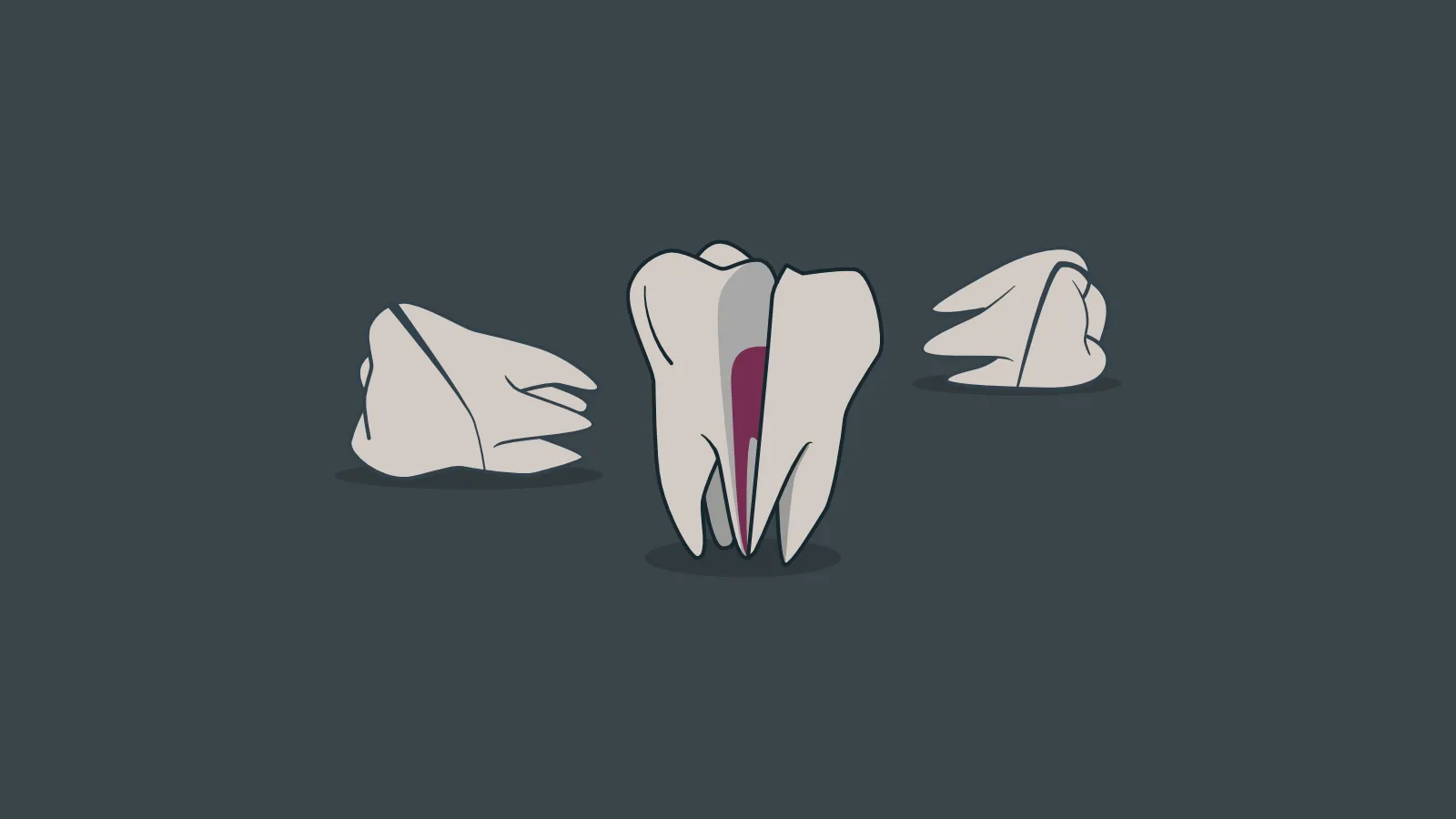
Settled into the dentist’s chair — he gave up his lunch break to fit me in — I grip whatever I can, close my eyes so as not to stare into the blinding lamp above me, and focus on my breathing to shut out the appalling pain. I can’t see him, but I picture the dentist standing over me, one foot planted on either side of my grimacing head, gripping a pair of forceps in both hands, back bent, waging fierce battle against a molar that refuses to leave home. Any second now, I’m certain, he’ll win, and go tumbling backwards in a slapstick pratfall the moment the tooth finally lets go.
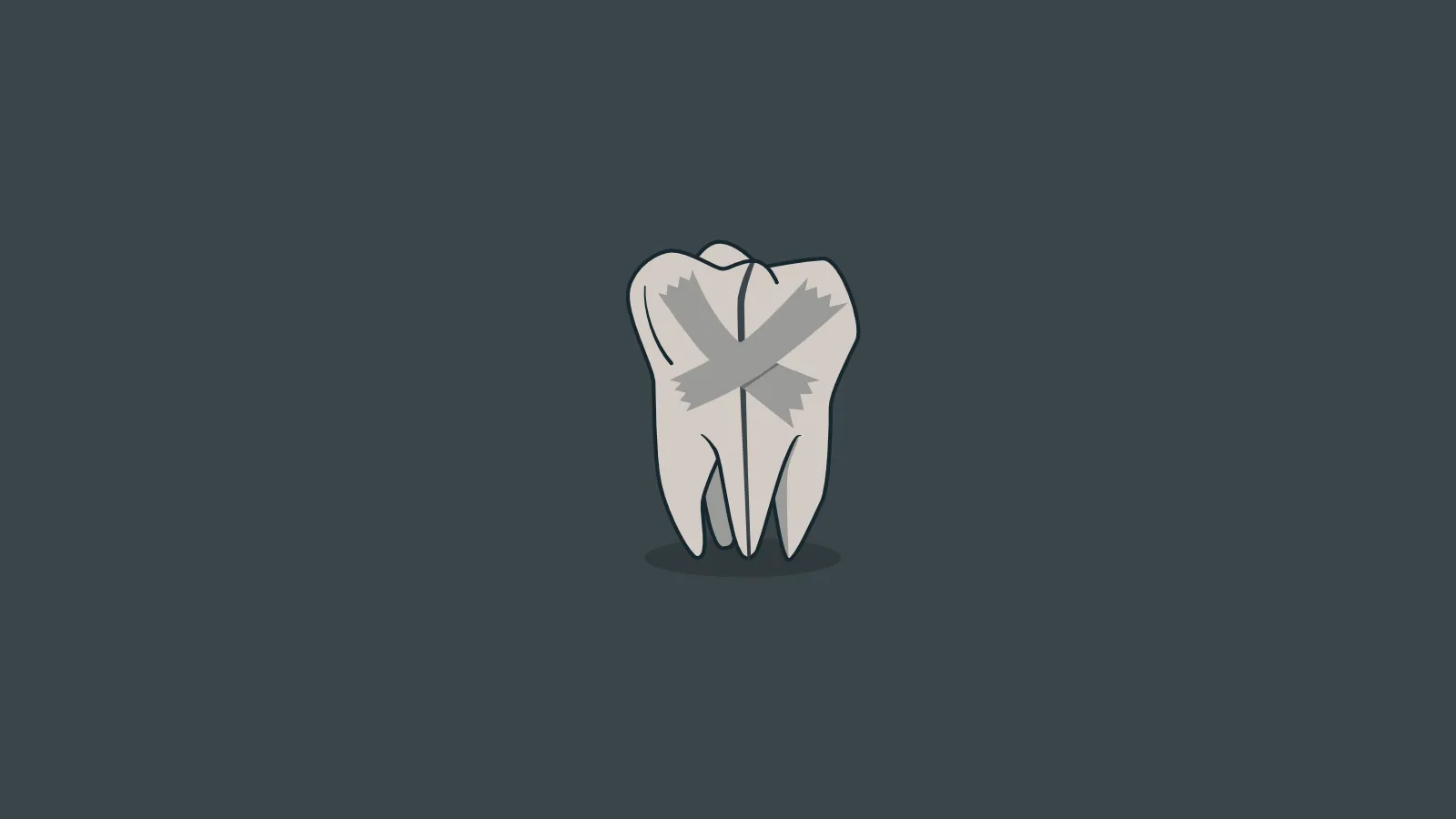
I think it’s shock rather than courage that gets me through the long minutes that feel like hours. That molar had been hurting on and off for months, but neither careful examinations nor repeated X-rays had turned up anything abnormal. It was perfectly healthy. And yet that morning, when I woke up, it was split in two from top to bottom, crown to root, beyond repair. There was no option but to pull it. On my way out, the dentist asked whether I was under a lot of stress. I said no — I had a fascinating job at the moment.
Sitting down behind the wheel in the car park outside, staring at nothing, I notice that the anaesthetic injections, meant to make the procedure easier, are only now taking effect. The pain fades bit by bit, and I can no longer tell whether my mouth is open or closed. I don’t think I’ve quite grasped what just happened.
The environment
It was only many months later, trying to piece together the events that could have led to this, and after losing two more molars, that I understood what my tooth had been trying to tell me all along.
To get there I needed the whole picture — something only time and distance allow — and a list of the small behaviours that look harmless one by one but together weave the sad reality of a great many workplaces. So let me tell you about him. Who is “he”? “He” stands for a manager, though not any one person in particular; he is really the sum of the intolerable behaviours I’ve encountered over my career. He is the portrait of a mechanism you probably know too, sometimes without ever naming it.
Have you noticed how “he” loves repeating the same remark he believes is witty, aimed without fail at anyone leaving on time or heading home in the evening? Something like: “Oh, taking the afternoon off, are we?” Between colleagues, humour is fair game — we tease each other. But when there’s a chain of command involved, and the remark comes every single day, is it still humour? More broadly, he’s fond of the recurring joke targeting a personal trait or habit of a subordinate, repeated ad nauseam at every morning meeting. Another habit: the routine threat-as-punchline, wheeled out at the slightest minor mistake, invoking a wildly disproportionate consequence — dismissal, exclusion — in a joking tone.
Sometimes “he” doesn’t even bother dressing it up as humour. In front of a client or a partner, he introduces me systematically as “a developer” — never by my actual role, never my fifteen years in the field, never my position as lead on the very project under discussion. And yet he knows my background personally, at the very least my training: we went through the same programme. So it wasn’t a clumsy shorthand but a choice, repeated, silent — a way of keeping me at a size that suited him, in the eyes of the people who mattered. Every time I asked him for feedback on an email or a report I’d sent days earlier, he answered, without fail, that he hadn’t read it. The repetition, and the way he said it as though it were self-evident, eventually convinced me that being ignored was normal. He often intercepts the conversation, too: someone comes to ask me a question directly, and he steps in to answer in my place.
Looking back, some situations seem more perverse still: compliments that are really insults in disguise. It often takes sustained pressure to get his opinion on the work delivered, and when it finally comes, it’s a verbal approval immediately followed by a caveat that cancels everything before it: “No no, don’t worry, what you’re doing is fine really, it happens, going down the wrong path and getting it completely wrong.” The most unsettling part is that this remark often lands right after a clear project success — and still it’s enough to leave you permanently doubting your own achievements.
A first distance protects power: however useful our experience makes our suggestions about the company’s digital strategy, however legitimate the urge to question behaviours that have been wrongly normalised, the message is intercepted along the way, guaranteeing that the person at the top never learns anything directly. A second distance protects information: the deliberate absence of documentation ensures that only one person holds the full picture, and challenging that takes persistence. It took me two months of pushing to obtain a diagram of the architecture of the software the company builds. Scribbled on a whiteboard — but it finally existed, and the team was discovering it at the same time I was. A third distance protects experience itself: interns don’t, as a rule, work in our offices; they’re kept apart among students, in a separate room. How is anyone supposed to discover working life that way? I fought for it, and got mine sitting with us — an exception I was reminded of, long afterwards, as a favour that had been granted to me.
We can’t control other people’s inappropriate behaviour, but where I think we can do better is in how we respond to it, collectively — and I include myself here. Situations that shock us in the first few days come to seem normal through sheer repetition. We’re told: “don’t take it personally,” “we’ve all had that once.” The group manages to talk us out of the abnormality of the situation.
In Influence: The Psychology of Persuasion, Robert Cialdini explains that faced with an ambiguous situation, we tend to work out what’s acceptable by watching how others behave. Normalisation doesn’t come from reasoning; it comes from imitating people who appear to have already absorbed the thing. And once we’ve taken a position, psychological pressure pushes us to stay consistent with that initial choice, sometimes against our own interest. By not opposing this normalisation, we end up quietly complicit in our own diminishment.
Letting him bend the truth to maintain the balance of power costs more than you’d think: his version of the story eventually settles into your own memory. You doubt what’s true. Then what you understood of demands that are always vague, always shifting. Then your own existence, as nothing you do seems to leave a trace any more.
The mirror image of this is a kind of inverted admiration: those who suffer it most speak of him with the most deference. A climate of fear has curdled into forced loyalty.
“He” says things that directly contradict what he does: the more loudly a value is proclaimed — wellbeing, listening, innovation, ego-free leadership — the further internal practice drifts from it. Recognition for work delivered, even after an unambiguous success, is conspicuously absent: it’s left to each person to read the silence as approval, in order to find some reason to keep going. The body, though, isn’t so easily convinced.
Long before I could put words to what was happening, my body was already keeping its own accounts. A few times I found myself in my car, in different circumstances, crying alone for a few minutes before I could compose myself again — a ritual I never planned and couldn’t explain. I also woke up, several mornings a week, every muscle in my face contracted, jaw clenched for no reason I could name, convinced it was nothing more than ordinary tiredness. We call that “holding up.” My body called it something else. It had already delivered its verdict, long before my mind agreed to hear it.
The human cost — the body keeps its own accounts
That verdict has a name in my case: bruxism — the involuntary clenching, sometimes grinding, of the jaw, often at night, linked to chronic stress. “Holding up” meant that at night, once my mental defences were asleep, my body took over to send the signal I refused to hear during the day. In my case the clenching was intense enough to break whichever of the teeth met first and gave way soonest — no decay, no warning sign visible on any X-ray. I lost three molars in the space of two years.
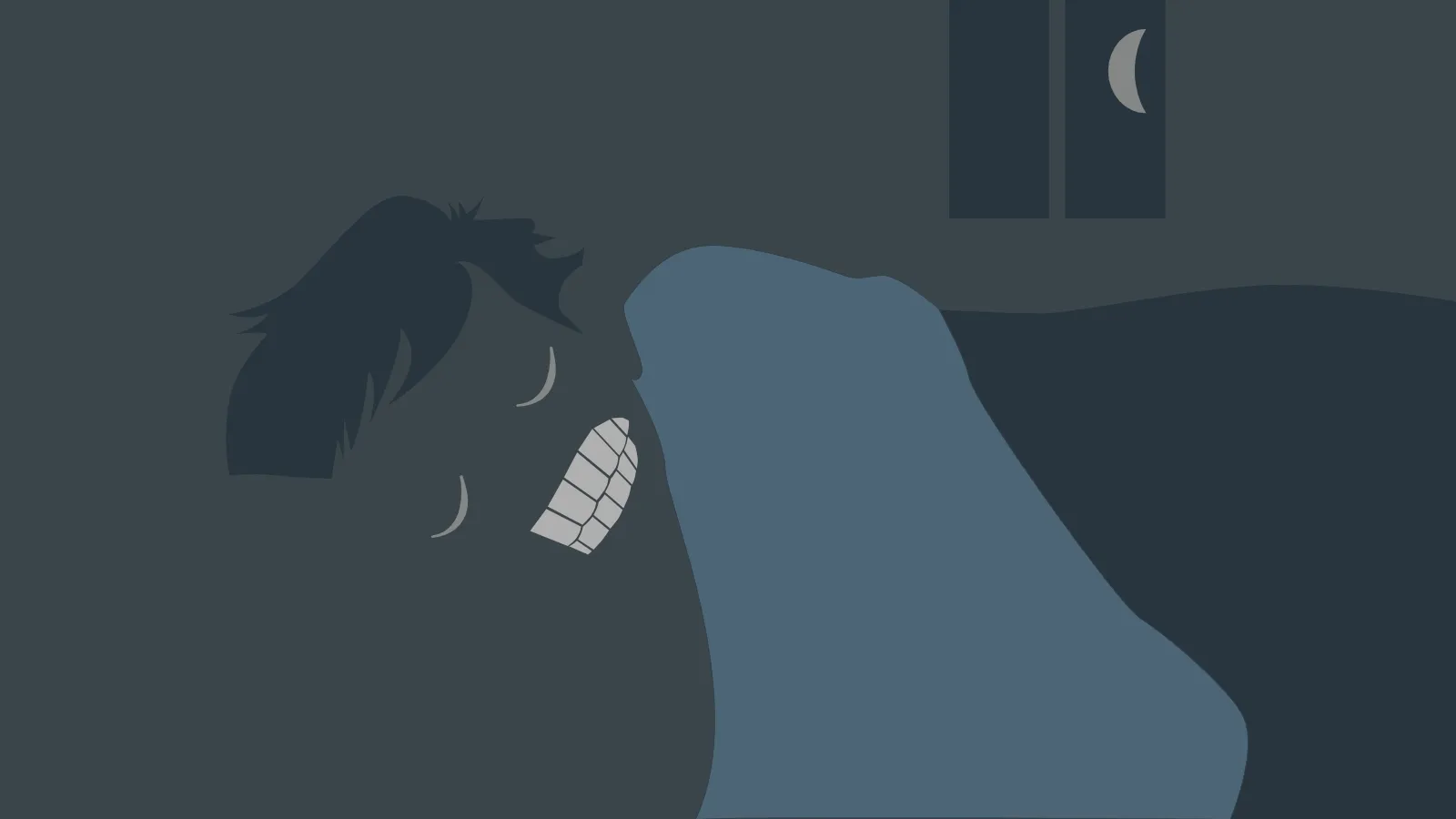
In Why Zebras Don’t Get Ulcers (1994), the neuroendocrinologist Robert Sapolsky studies the effects of chronic stress on the body — a stress most animals only experience in episodes (fleeing a predator), unlike humans, who are exposed continuously (the fear of losing your job). He notes that chronic stress also exists among certain social primates, particularly in individuals near the bottom of the group’s hierarchy. Sapolsky looks in particular at the effect of glucocorticoids, cortisol among them: useful for triggering a one-off response to danger, they become harmful when released continuously. A number of dysregulations eventually set in, with measurable effects: muscle tension, sleep, immunity. My dentist’s question at the start of this story wasn’t idle. While the causes of bruxism aren’t fully understood, it’s generally agreed to be linked to anxiety and chronic stress. When it happens during sleep, the patient usually only discovers it through the consequences for their teeth and jaw — which means it’s the dentist who breaks the news. It’s not a competition, but mine did admit my case was out of the ordinary.
Of course, all of this is personal experience and can’t stand for a general rule. And yet, you only have to look to see the signs around us: people permanently on edge, colleagues absent for a long time whom everyone seems awkward about mentioning, phrases worn down into ironic refrains (“shall we all just quit?”), someone eating alone in the dark, someone else who no longer takes the time to eat at all. My molar was neither an isolated case nor a personal weakness — it was one element of a collective pattern I had observed without ever really wanting to see it.
What I take from these unpleasant experiences is that the body files its report long before the mind agrees to read it. And so, very often, we only understand something is wrong once it’s already too late. My three teeth, broken in my sleep, were three warnings I ignored.
If the body pays a price this concrete, what about the work produced in the meantime?
The cost to the work — the story rarely told
Earlier I listed a few examples of abnormal behaviour in a workplace. The harmful consequences for employee wellbeing are easy enough to grasp, but I’ve also seen consequences that reach well beyond individuals. When mockery is normalised and jokes about disproportionate sanctions are made constantly, what happens when a genuinely high-stakes decision comes along? Nobody will propose the right answer if it’s the risky one. People will pick the safest option, never the best one, because a safe option can’t be held against anyone. In software, innovation gives way to rebuilding what already exists, a promising team reverts to a collection of individuals, and code reviews turn into diplomatic exercises. Technical debt becomes emotional debt, built to last.
On a project to build a new piece of software from scratch, once we had a working prototype, “he” asked my opinion on holding a public event to present the product to prospective users. At that stage of development I knew we were still a long way from something sellable — and having designed and sold software for ten years, I knew the first two questions we’d be asked were “how much does it cost?” and “when can we have it?”. I told him what I thought: we weren’t ready to go to market, but the roadmap laid out precisely the steps that would get us there. In a separate steering committee, made up of his own superiors on this project, I sat in on the call where others independently reached the same conclusion. Nobody thought to give me the floor; I didn’t take it either.
After we hung up, he asked for my view. I couldn’t help pointing it out: they’d just taken an hour and a half to agree with me. “We’re doing it anyway!” he replied, already on his way out of the room. The consequences were direct and measurable: two months of work, including nights and weekends, cobbling together something in a hurry to hit the deadline. Then all of it thrown away once the event was over, and rebuilt properly afterwards. I made myself complicit in that technical debt, choosing silence over confrontation — or perhaps giving in to the fear of contradicting him.
Elsewhere, the problem isn’t that the wrong direction was chosen: it’s that no direction was ever given at all. So you advance by guessing, you build on assumptions nobody ever confirms, and the day the scope shifts again, you discover you’ve built beside the point.
And yet he works. He boasts constantly about working weekends, contacts his reports in the evenings and during their holidays, rushes from one meeting to the next making as much noise as possible crossing the office, just to be sure he’s seen. He never has the time. Never, at any rate, to read an email, write a spec, or set a clear objective. His answers are always excessively long and convoluted, and never address the question asked. The fifteen minutes he grants us, once everyone else has left, can therefore consist of a single loop: a rambling monologue, capped with “Is that clear?”, followed by “Erm… no?”, and the monologue starts again, different but still going nowhere. On the third round, I gave up pretending: “I have absolutely no idea what the purpose of the conversation we just had was.”
When silence becomes the norm, a discovered bug is never mentioned, and an honest warning grounded in years of experience — “this won’t work if we do it that way” — is never spoken. Worse: the contractors handed a critical part of the development for years on end are the source of most of the quality and delivery problems. Nobody ever tells him. When someone like me dares question the arrangement, shortly after joining, the response reveals not denial but genuine ignorance: “What? The code they produce gets systematically rewritten by our team? Well, that’s news to me!” In Managing Humans, the management consultant Michael Lopp describes three possible scenarios for a one-to-one with your manager: the routine update; the moment when someone finally dares to complain; and the disaster you could have avoided by listening to that complaint in time. He never heard anyone’s complaint, because nobody ever dared offer him one. He most likely only ever got the polite update, right up until the day of the disaster. Once, I asked two company leaders how they ran their one-to-ones with their staff, so I could align with their practice for my own team. They answered with the same disarming sincerity: “We don’t do those, we clearly don’t have time for that. I didn’t even know it was a thing!” That ignorance owes nothing to chance: it was built, year after year.
Ignorance isn’t always so sincere. Elsewhere, where I was only there for the length of an assignment, an entire team locks down access to a management system explicitly designed to be used directly by every department, with no technical skill required. Having had its headcount cut more than once, this team maintains the fiction that it alone knows how to operate the tool: every department must therefore go through them for the smallest request, creating a queue that nothing justifies — covered by a management chain that would rather not see what everybody knows.
One day I heard that same team arguing about VAT calculations: how to recover a pre-tax amount from a tax-inclusive one, and back again. For VAT at 20%, they multiplied by 1.2 in one direction and by 0.8 in the other — a classic error (the inverse of multiplying by 1.2 is dividing by 1.2, not multiplying by 0.8) they had been repeating for years. I offered to help and attempted a demonstration on the whiteboard. “If that’s true, we’ve been invoicing at the wrong price for at least ten years,” one of them let slip. I was reported to the manager for meddling in “confidential matters.” What followed was more surprising still: the HR director, looking me straight in the eye, announced: “We don’t pay you to think!” A few days later, I gave notice that I wouldn’t be extending my assignment beyond its end date.
A toxic environment leaves two casualties: the people who pass through it, and the work they produce together — work that has become dishonest, untrue to its own values, expensive for the entire company.
What this taught me about management
Fear is a primary emotion, shared by many species, and it plays an essential role in survival by preparing us to react to risk or danger. But we’ve seen here some of its effects once it’s redirected into a professional setting — on people, and on the work itself. Not normalising mockery or ironic threats of sanctions goes without saying. But I don’t think abstaining is enough: that still leaves a vacancy for fear to move into on its own. The question is what to put there instead. Some people have looked into it seriously.
Google’s Project Aristotle (an internal study, 2012–2015) set out to rank the factors that make a team perform. It concluded that psychological safety was by far the most decisive factor in a team’s performance — more than individual competence. Psychological safety is the emotional state in which you feel comfortable speaking up, taking risks, and being vulnerable in front of others. The study went further, showing that it acts as the indispensable foundation for the other contributing factors: colleagues you can count on, clear objectives, finding meaning in your work, and the conviction that your contribution has an impact. The findings were widely relayed in Charles Duhigg’s New York Times Magazine article, What Google Learned From Its Quest to Build the Perfect Team (2016). I’ve encountered nearly all of those factors. By their absence.
The day someone dares to say “we’re not ready,” a manager should never turn on his heel; he should open a collective search for a solution. Voiced in time, and defended despite the fear of causing friction, that obvious point would have spared two months of sleepless nights patching up a product we already knew, internally, wasn’t ready. This kind of safety isn’t only tested in the moment someone speaks up. It’s also measured over time, by how quickly bad news travels upward. A manager’s role, I believe, is also to be the first person told about a problem — not the last one to find out, years later, left with nothing to say but that it’s news to him, once it’s too late to choose otherwise. In an environment where speech stays free, problems get solved by several people, and faster. Where mistakes aren’t punished, people dare to try — and pull ahead of those who stay cautious out of fear.
That assumes you know what you’re aiming at. A manager incapable of formulating a clear objective can only assess what’s visible. The only subject he raises in an annual review is what time you get in each morning. He measures nothing but presence. And rewards, without meaning to, everything that damages productivity. Shared documentation isn’t only a matter of rigour, it’s also a question of power. Everyone confined to their own corner, nobody with the whole picture, and pressure to use the tools only the manager uses, sometimes against all common sense. You engineer a dependency on a handful of specific individuals, and preserve, along the way, a semblance of power. That in itself should be read as a warning sign.
That leaves the last of these factors, and probably the easiest to destroy: the conviction that what you do matters. To wipe it out, you need only do nothing at all. Someone says something true, and it goes nowhere. Sometimes hierarchical distance is deliberately maintained as a wall — “you don’t speak to the director directly” — rather than as a marker of respect. A healthy organisation is measured by how easily a legitimate question can travel upward without a social filter. Distance elevated into an unwritten rule should count as an organisational warning sign in its own right, not merely an individual character trait. And a truth-gathering exercise is worthless if it leads nowhere. Writing new-joiner observation reports, meeting notes, post-mortems from which lessons are drawn — all of it requires one thing only: that the manager guarantee they’ll be used. Anyone who systematically replies that he hasn’t read what was sent to him directly will get nothing next time but silence or flattery. He is training his teams to stop being honest.
A fresh pair of eyes is a perishable resource: a newcomer’s first weeks are the only moment when they see clearly what the team no longer sees. It has sometimes taken me months to understand a feeling I couldn’t explain when joining a new team. And once that window of surprise has closed, you end up moving the line of what you tolerate to match the new normal. A good manager should treat that window as precious, and actively seek it out.
The cost of a toxic environment is invisible on the dashboards a company is run from. It is no less enormous on every one of them. I’ve described all of this from where I was on the receiving end. What’s left is to talk about it from where I let it take hold myself.
Through the looking glass
My first job out of university was as a photogrammetry engineer in a research team set up by one of my professors, half of it made up of friends from my year. The atmosphere was genuinely warm and the creative freedom total; that period gave me the chance to experiment without constraints and to produce work I’m still proud of today. When the research project came to an end, hoping to keep that creative momentum going, my two best friends and I went into business together and founded Paztec, a startup pioneering 3D and augmented reality on mobile. And so I found myself running a company, leading a team, with no real notion of what I was supposed to do and nobody to teach me.
The company lasted eight years. We digitised historic sites across Europe, delivered projects for construction giants, helped a local manufacturer win a €5M national contract, created jobs and paid salaries. A good part of that comes down to there being three of us carrying it, and to a time when the field was still new — not to my qualities as a manager.
Today, six years after the end of the adventure, having grown through experience, training and books devoured since, I can plead guilty to most of the errors specific to managing on instinct. From the very start I chose to absorb the problems and every aspect of running the company rather than delegate, and in doing so stopped my partners from growing. I confused kindness with the absence of structure, neglecting written objectives entirely — and therefore reviews, and therefore any foundation for progress. I carefully avoided uncomfortable conversations because I cared about people, and let things rot that should have been said early. I became a single point of dependency myself, having failed to pass anything on. And I never built, alongside our friendship, a working relationship with its roles, its expectations and its uncomfortable conversations.
“I’d rather leave.” That’s what one of my partners tells me, six years after founding Paztec with me. Six years of closeness, at work and outside it. A single glance was enough for us to understand each other — and to keep a straight face when a client came in to pitch his project for travel through parallel dimensions. I didn’t see it coming at all. In the moment, I don’t know what I’m feeling; I don’t even try to identify it. Stay rational: if that’s what he wants, I have no reason to stand in the way. I’m already thinking about the practicalities, about preparing his departure.
And yet, when I find myself alone in an office that had been so alive a few years earlier — five people, and often a few interns who always brought tremendous energy to the team, because they were with us rather than in a room of their own — all I can feel is bitterness. The team had already shrunk to better match the volume of projects we could handle. My other partner had moved away and had been working remotely for months; my daily life was the two of us, our conversations to reassure me, or to bring me back down to earth. Would I be strong enough to make up for losing a third of the trio? The future would show me I wasn’t. That departure set off a chain of events that only now allow me to understand his decision. Once he’d gone, I found myself alone in an empty office, alone in front of clients, alone in front of bankers, alone deciding what our next project would be, alone deciding to stop when none of it made sense any more.
I understand now that for me, the meaning I found in that adventure was the camaraderie — the sense of belonging to a group, of climbing technical mountains because the three of us were invincible.
And yet I still had a partner 600 km away. If I’m honest, that isn’t where I found myself alone. It happened much earlier. The real moment was when I decided not to delegate anything touching the running of the company. When I told myself, meaning well, that I’d spare them all the things that looked tedious but necessary. I isolated myself from the very beginning, stripping them of their impact on the adventure, and of their involvement in what justified our partnership in the first place.
That’s exactly the problem: taking away their sense of having an impact, and of finding meaning in their work. Had I held regular one-to-ones where I asked about precisely these things, instead of assuming that since we shared an office they could speak up if they wanted to, I wouldn’t have been surprised by that departure. And I’d probably have understood that I wasn’t doing anyone a favour by refusing to delegate.
Obviously this is an analysis I’m making today, with hindsight. Could I have done better at the time? Not with the knowledge I had — but I could have learned, and should have. The books existed, so did the courses and the mentors. I didn’t go looking for them because I believed, like many engineers, that managing was a matter of character rather than a craft.
Management is a learned skill, not a talent. You’re not born with it.
We know how to recognise a technical skill: you watch someone acquire it, fail, start again, improve. Learning to manage, nobody ever sees. We only ever know the result — or precisely its absence — which sustains the illusion of a temperament.
That’s also what lets us draw a line. Incompetence can be made good: it can be learned, corrected, and it says nothing about your worth. Cruelty has no such excuse. No training was missing from the man who repeated the same mockery every morning.
My bitterness is gone. What replaced it is a certainty: build an environment where people can speak first, and ask the questions before leaving becomes the only possible answer. I think I can say that today, with my friends and former partners, we talk far more honestly than we did when we worked together.
All of this can be learned, then. What’s left is what can’t be repaired.
Conclusion
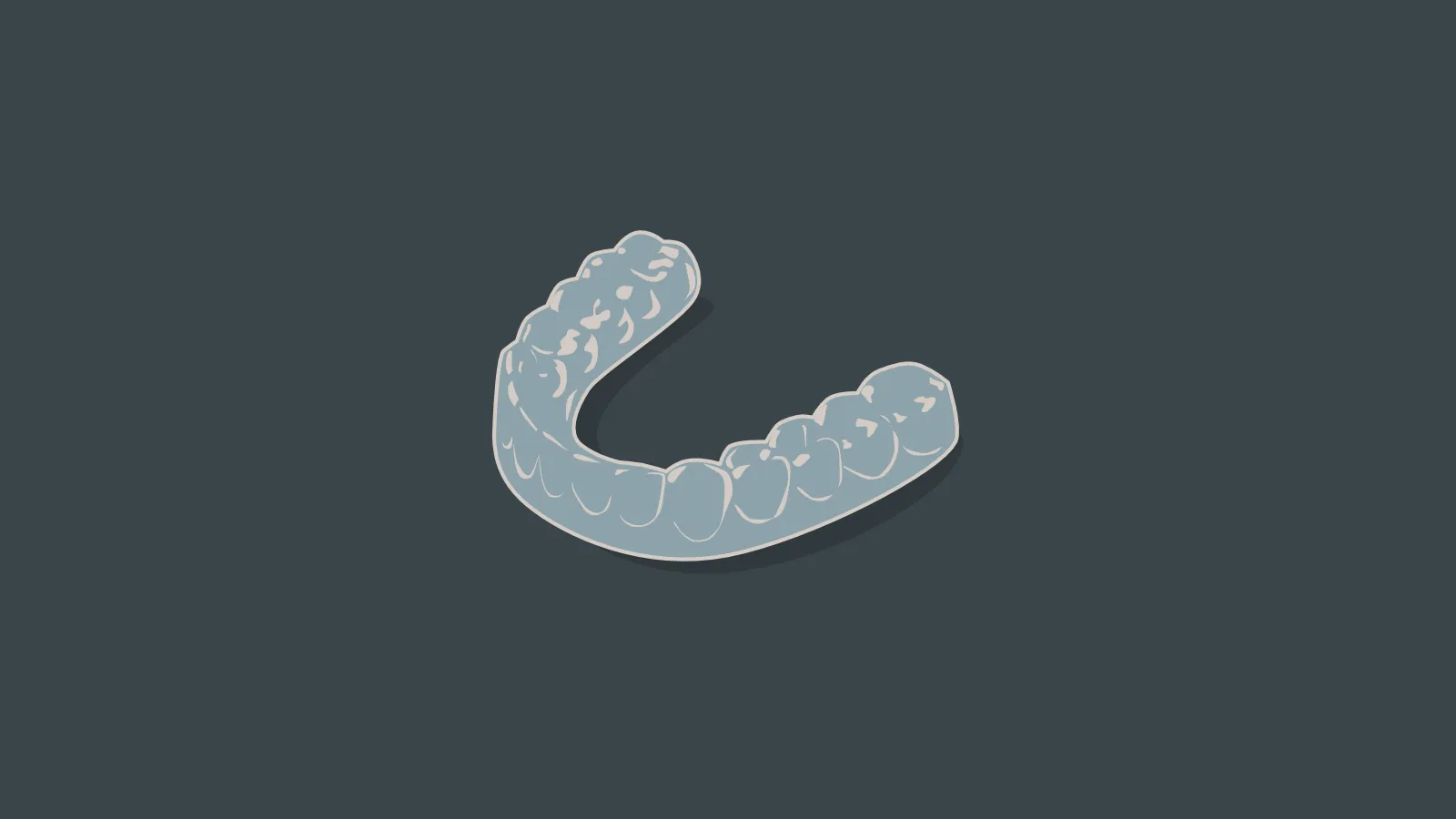
Two empty gaps and one wisdom tooth short — and I’m the only one who can feel it. Settling back into his chair to be fitted for the night guard meant to protect my teeth while I sleep, I tell the dentist: “I think you were probably right about the stress…”
Three teeth for everything I’ve learned is a steep price compared with the books cited in this essay. My advice would be to start with the books — and if that’s not your thing, my method will always be there.
Those experiences are behind me now. And every night, a piece of plastic still protects me from myself.
- Sapolsky, Robert M. Why Zebras Don’t Get Ulcers, 3rd ed., New York, Holt Paperbacks, 2004.
- Cialdini, Robert B. Influence: The Psychology of Persuasion, New York, Harper Business.
- Lopp, Michael. Managing Humans: Biting and Humorous Tales of a Software Engineering Manager, 4th ed., New York, Apress, 2021.
- Duhigg, Charles. “What Google Learned From Its Quest to Build the Perfect Team,” The New York Times Magazine, 25 February 2016.
- Fadell, Tony. Build: An Unorthodox Guide to Making Things Worth Making, chapter 2.1.